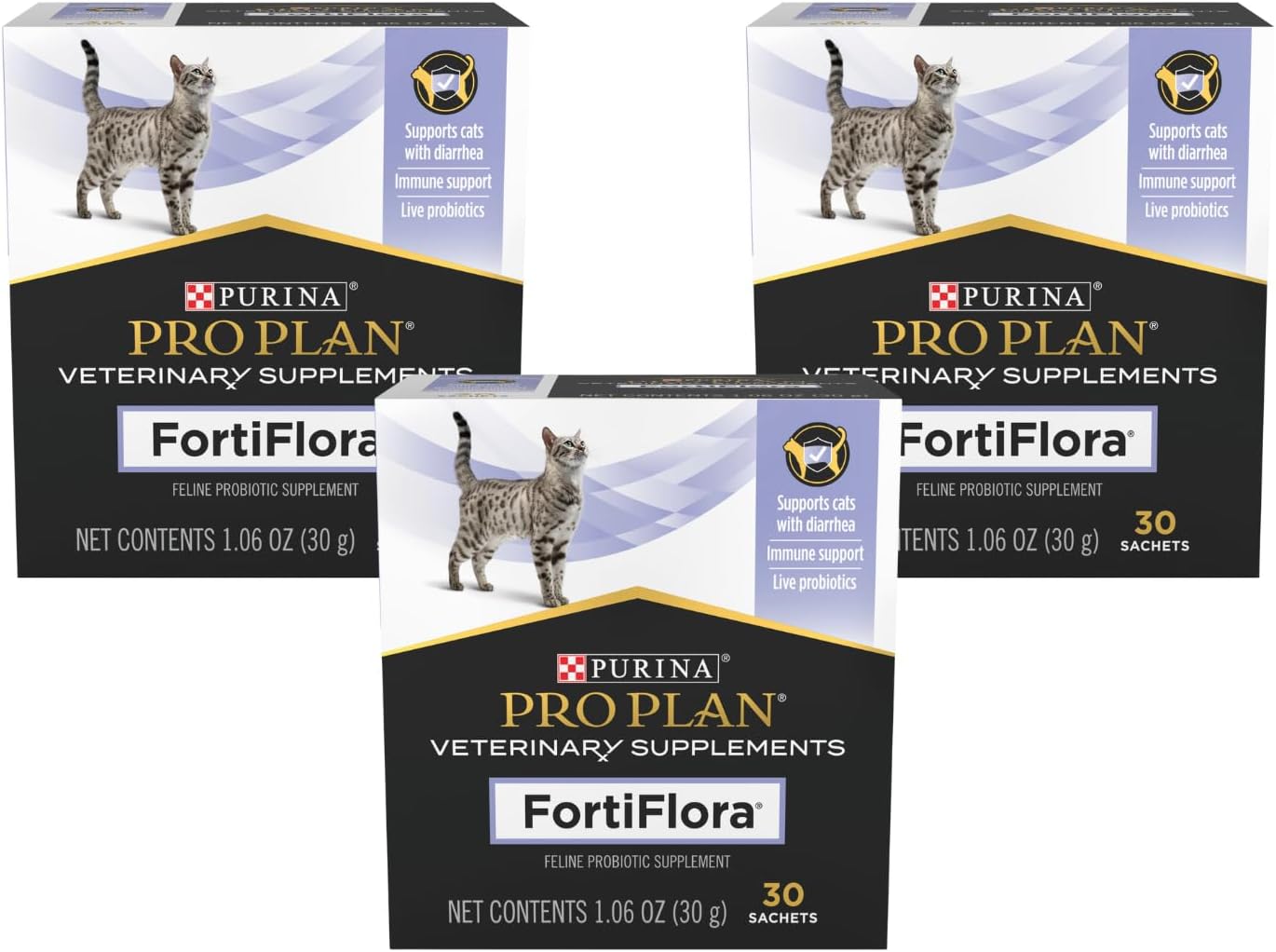
What the white residue actually is
FortiFlora is a powder, not a tablet or capsule. The bacteria are stabilized in a carrier that includes animal digest, antioxidants (vitamins E and C), and inert bulking agents. Some of that carrier passes through the gut undigested, which is what you're seeing in your dog's stool.
The bacteria themselves don't show up as white flecks. E. faecium SF68 cells are microscopic — you'd never see them with the naked eye. What you see is the carrier residue, which is normal and harmless.
This is more visible in the first 3-5 days while your dog's gut adjusts to processing the new material. It usually decreases as the days go on.
When it's normal
White or off-white flecks in stool that meet these criteria are almost certainly the supplement carrier:
- Small, powdery, or chalky in appearance
- Don't move
- No specific shape
- Show up only after you started the supplement
- Stool is otherwise normal in color, consistency, and frequency
- Your dog feels fine
In this case, ignore it. The supplement is doing its job; this is just visual residue from the carrier.
When it's not the supplement
A few things look similar to white powder residue but mean something different:
Moving white segments — These are tapeworm segments, not supplement residue. They look like grains of rice and may still be wriggling shortly after passing. Tapeworms are very common and easy to treat, but it's a vet trip for the right dewormer, not a supplement question.
White roundworms or string-like white worms — Roundworms appear as longer, spaghetti-like white worms. Especially common in puppies. Needs a fecal panel and deworming.
White mucus coating the stool — A clear or whitish slimy coating suggests gut inflammation rather than supplement residue. If it shows up alongside diarrhea or straining, get a vet check.
Bone fragments — If your dog has access to raw bones or scavenges, white chips in stool can be bone. Different texture (sharp, brittle) than supplement powder (soft, chalky).
Crystalline white deposits — Sometimes calcium or other minerals show up as small crystalline pieces. Generally harmless but unrelated to FortiFlora.
How to tell them apart
A quick visual check usually settles it:
| What you see | Most likely cause |
|---|---|
| Soft, chalky, powdery white flecks scattered through stool | Supplement carrier |
| Rice-grain shaped pieces, sometimes moving | Tapeworm segments |
| Spaghetti-like white strands | Roundworms |
| Slimy white coating on stool | Gut inflammation (not the supplement) |
| Sharp, brittle white chips | Bone or foreign material |
If you're not sure, take a photo and send it to your vet. They can usually tell from an image whether it warrants a fecal panel.
Should you stop the supplement?
Not for white residue alone. If everything else is normal — appetite, energy, stool consistency, no straining — keep going. The residue typically decreases after the first week as your dog's gut adjusts.
If the white material is accompanied by diarrhea, blood, mucus, weight loss, or any concerning behavior, stop the supplement, collect a fresh fecal sample, and get to a vet for proper testing.
Two practical adjustments
If the residue bothers you visually even though everything else is fine, two changes can reduce it:
- Mix into wet food rather than dry. The carrier dissolves more completely in moist food, leaving less unabsorbed material to pass through.
- Add a tablespoon of warm water to the powder first to make a paste before mixing with food. Same idea — better hydration of the carrier means more complete absorption.
Neither is strictly necessary; both just reduce the cosmetic residue.
When to call your vet
- White material in stool that's clearly tapeworm or roundworm shape
- Stool changes beyond just visual residue (diarrhea, blood, mucus)
- Straining, scooting, or visible discomfort
- Weight loss alongside the residue
- Your dog is a puppy and you've never had a fecal panel done
For most adult dogs, this is a non-issue. The carrier is doing what carriers do.