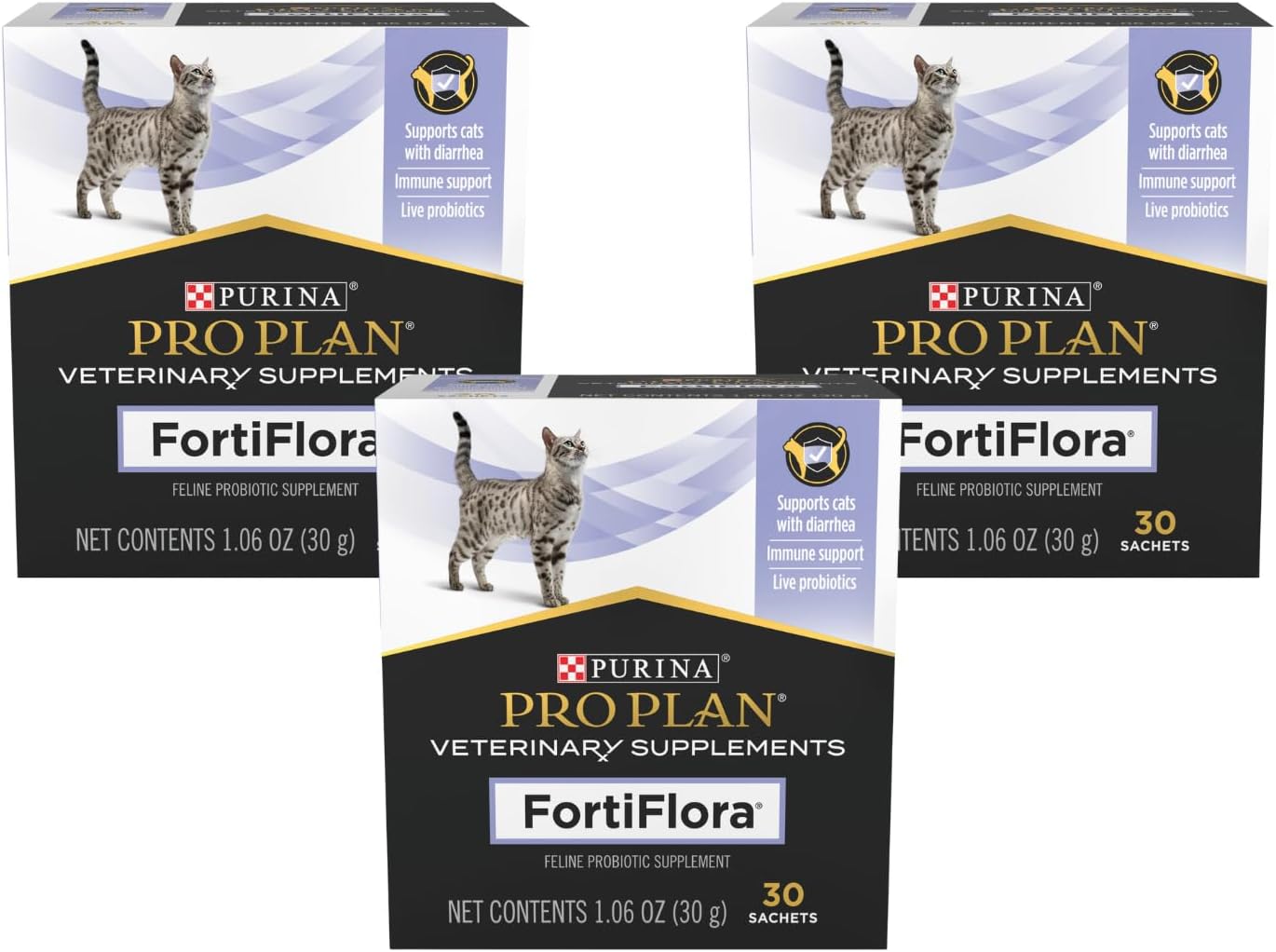
Why seniors respond more slowly
Older dogs have less microbial diversity in their guts to begin with. Studies of aging in dogs and other mammals consistently show that beneficial bacterial populations thin out with age, and the overall ecosystem becomes less resilient. When you add a probiotic, you're not topping up a healthy gut — you're trying to rebuild a depleted one.
That rebuilding takes longer. Where a young adult dog might show visible improvement on FortiFlora within 3-5 days, seniors often need 7-14 days. Some respond even more slowly.
This isn't a sign the supplement isn't working. It's a reflection of where the senior gut is starting from.
What "benefits" actually look like in seniors
Senior dogs on FortiFlora often show improvement in several ways, not all of which are dramatic:
Firmer stool consistency. May go from soft-formed to fully formed over a couple of weeks. Sometimes the change is subtle but real.
Less gas. Older dogs often have more gas as part of the aging process. FortiFlora typically reduces this gradually.
Better appetite. Some seniors eat more reliably once gut comfort improves. Not always dramatic but consistent.
Less frequent GI upsets. Senior dogs are more prone to mild GI flares from minor dietary indiscretions. Daily FortiFlora reduces the frequency and severity.
Stable energy. Some seniors regain a bit of pep when GI comfort improves. Not a dramatic rejuvenation — just stable, comfortable energy.
Owners sometimes expect dramatic improvement. The reality for senior dogs is usually quieter — less drama, more comfort.
A realistic two-week timeline
For a senior dog starting FortiFlora:
- Days 1-3: Possibly mild adjustment effects. Sometimes brief loose stool or mild gas. Don't panic.
- Days 4-7: Adjustment settling. Maybe small improvements visible in stool quality.
- Days 8-14: Most senior dogs show clearer improvement here. Stool firmer, gas reduced, appetite stable.
- Week 3-4: Continued stabilization. The colony is fully established.
If your senior dog hasn't shown any improvement by week 3, reassess whether this is the right tool for their specific situation.
What slows improvement in seniors
A few factors particularly relevant for older dogs:
Concurrent medications. Many seniors are on multiple medications — pain management, heart medication, joint supplements. Some of these affect gut motility or microbiome stability and slow probiotic establishment.
Reduced dietary tolerance. Older dogs often have narrower tolerance for dietary changes. If you're transitioning food at the same time, both processes interfere with each other.
Lower baseline gut activity. Slower digestion means slower turnover of gut contents. Bacteria establish more slowly when the substrate refreshes more slowly.
Dental issues affecting food intake. Seniors with dental pain eat less consistently. Inconsistent FortiFlora intake means inconsistent results.
Chronic conditions affecting the gut. Kidney disease, liver disease, pancreatic issues — all common in seniors and all affect how the gut handles probiotic supplementation.
When other interventions matter more
For senior dogs, sometimes the probiotic isn't the main lever:
Diet changes often help more than supplements. Switching to a more digestible food, a senior-specific formula, or one without legumes/high fiber can do more than any probiotic.
Smaller, more frequent meals. Three meals daily often work better for senior digestion than two.
Dental health. A dog who can't chew comfortably swallows large pieces of food, which complicates digestion. Addressing dental issues sometimes resolves GI symptoms more than probiotics.
Hydration. Senior dogs often drink less than they should. Encouraging water intake matters for stool quality and overall GI function.
Weight management. Overweight seniors have more GI issues. Targeted weight loss often improves multiple symptoms.
None of this competes with FortiFlora — they work together. But focusing only on supplements misses bigger opportunities.
When senior gut issues need workup
Some patterns in seniors warrant looking beyond probiotic support:
Persistent diarrhea or loose stool more than 2 weeks. Could be exocrine pancreatic insufficiency, inflammatory bowel disease, or even GI lymphoma. Probiotics don't fix any of these.
Weight loss alongside GI symptoms. Almost always significant in seniors. Needs bloodwork and possibly imaging.
New-onset GI issues in a previously stable senior. Something changed; figure out what.
GI symptoms plus other systemic signs. Increased thirst, urination changes, behavioral shifts — these point at broader workup needed.
Black tarry stool or fresh blood. Always a vet visit. Not a probiotic question.
When the supplement is working
If you're seeing the kinds of subtle, steady improvements described above by week 2-3, the supplement is doing its job. Continue daily for as long as you want the maintenance. For most seniors, long-term daily use is safe and reasonable.
Bottom line for senior dogs
Plan on 7-14 days before you see clear improvement, and 3-4 weeks for full benefit. Improvements are usually subtle rather than dramatic. If nothing has changed by week 3-4, the supplement isn't the right tool alone — look at diet, dental health, and underlying conditions that might be limiting response.
When to call your vet
- Senior dog with new-onset GI symptoms lasting more than a week
- GI symptoms plus weight loss, increased thirst, or other systemic signs
- No improvement after 3-4 weeks of consistent FortiFlora
- Multiple senior dog issues co-occurring (GI + appetite + energy changes)
- Senior dog on multiple medications where supplement interactions concern you
- Any new symptoms during the probiotic course that weren't there before