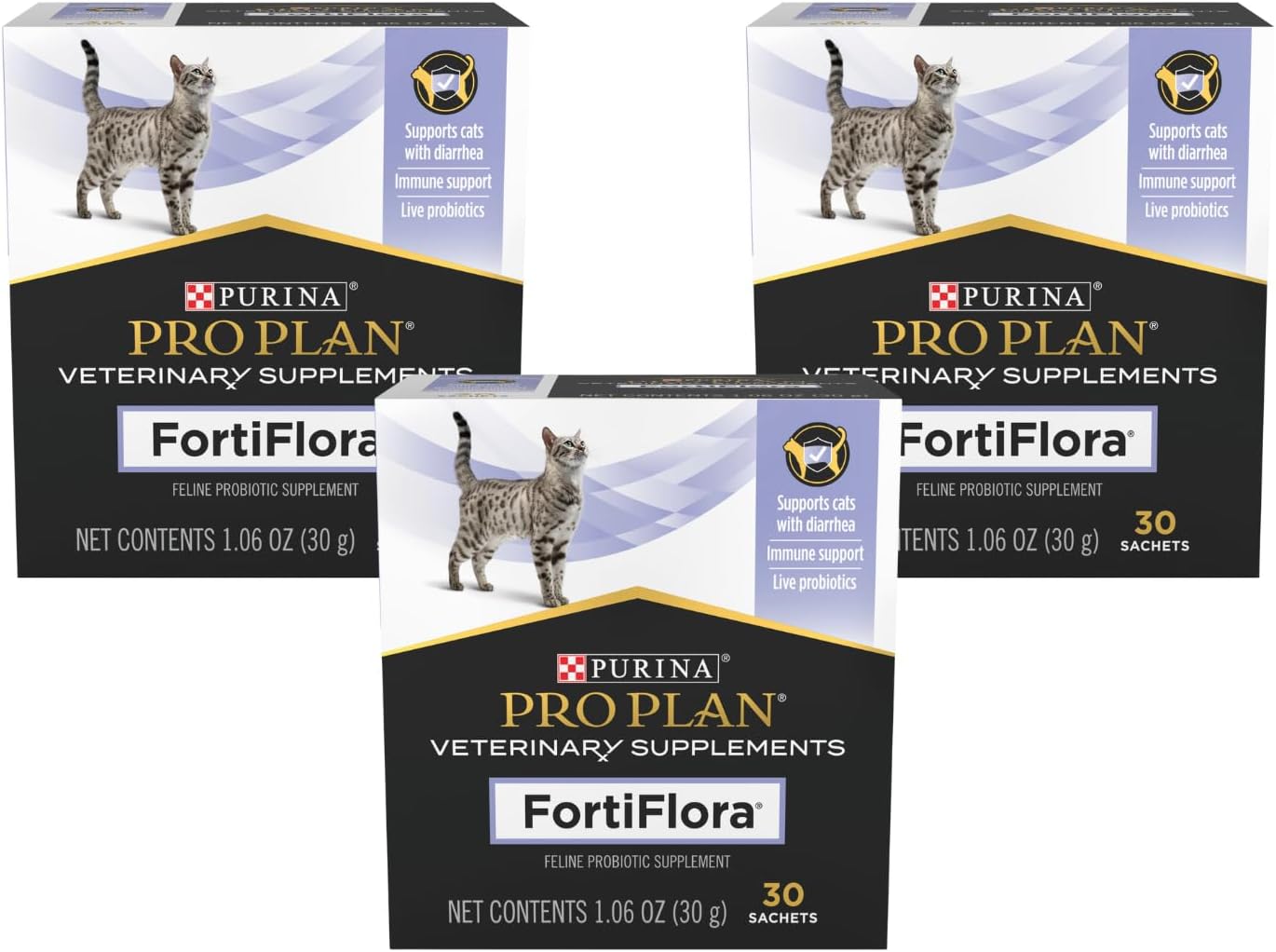
Probably not the supplement
FortiFlora doesn't have a known mechanism for increasing thirst. The active probiotic strain doesn't release compounds that affect kidney function, blood sugar, or any other system that regulates water intake. When increased thirst appears around the time you start the supplement, the cause is almost always somewhere else.
A few common explanations to check first:
Cause 1: The food it's mixed with
Different foods have different sodium content. If you started mixing FortiFlora into a different food than usual — wet food when you used to feed dry, or a different brand of wet food — the sodium difference might be driving the thirst.
Check: Is your dog eating the same food as before, with FortiFlora simply added? Or did you also change food or feeding format?
Fix: Stabilize on one food. If you changed both supplement and food at the same time, you can't separate the variables. Go back to the previous food (with FortiFlora) for a week and reassess.
Cause 2: Weather or seasonal changes
Dogs drink more in warm weather, after exercise, and during seasonal transitions. If your dog started FortiFlora in spring or summer, the increased thirst may just be weather.
Check: Has the weather warmed? Has activity level increased? Is the house being heated to a higher temperature than usual?
Fix: Not really a fix needed — increased drinking in warm weather is normal. Ensure water is always available and clean.
Cause 3: Coincidental medical conditions
Some medical conditions produce increased thirst and happen to appear around the same time as starting a supplement. The two are unrelated, but the timing is suggestive.
Common ones to consider:
- Early diabetes mellitus
- Early kidney disease
- Hyperadrenocorticism (Cushing's disease)
- Pyometra in unspayed females
- Hyperthyroidism (rare in dogs)
- Diabetes insipidus
- Some medication side effects (especially steroids)
If your dog is also urinating more frequently, getting up at night to drink, having accidents in the house, or showing other behavioral changes, this category becomes more likely.
Fix: Bloodwork. This is a vet visit if increased thirst is meaningful and persistent.
How to tell normal increase from concerning increase
A rough way to evaluate:
Normal: Slightly more drinking, especially in warm weather, after walks, or after meals. Bowl needs refilling once a day instead of every two days. Dog doesn't seem distressed, isn't urinating more than usual.
Possibly concerning: Drinking water emptying multiple times daily. Up at night to drink. Urinating noticeably more often, larger amounts, or having accidents. Drinking unusual sources (puddles, toilet bowls, plant water).
Definitely concerning: Excessive thirst combined with appetite changes (either increased or decreased), weight changes, lethargy, vomiting, or any other symptoms. This is a vet visit regardless of supplement context.
Trying to measure thirst increase
If you want to check whether the thirst increase is real or just perception:
- Measure the water you put in the bowl daily for 3 days at baseline (before any supplement)
- Then measure again for 3 days while the dog is on the supplement
- Account for environmental factors (weather, exercise level)
- Compare the averages
Normal adult dog water intake is roughly 50-60ml per kg of body weight per day. A 20kg dog drinks about 1-1.2L daily. Significant increases beyond this (especially if doubling) warrant attention.
What FortiFlora actually does to water balance
The strain doesn't pull or push water in either direction. Some indirect effects are theoretically possible:
- If FortiFlora is improving stool consistency from loose to formed, the dog may absorb water better and drink slightly less (the opposite of increased thirst)
- If the dog has been mildly dehydrated from previous diarrhea, they may catch up on hydration in the first few days of recovery — this is a one-time adjustment, not ongoing increased thirst
Neither of these explains chronic increased thirst.
What to actually do
If your dog has mild increased thirst and you suspect the supplement:
- Check the food. Same brand, same formula, same wet/dry as before? Stabilize if anything changed.
- Check the environment. Weather changes? Activity level different? Heating turned up?
- Check the other inputs. Treats with high sodium? Table food? New training treats?
- Watch for 1 week with no other changes. Does the thirst continue?
If the increased thirst persists past a week with no environmental explanation, it's worth a vet visit even if the supplement is the most recent change. The supplement probably isn't the cause, but the timing might have prompted you to notice an underlying condition.
What if your dog is urinating more too
Polydipsia (increased thirst) plus polyuria (increased urination) — abbreviated PU/PD by vets — is a specific pattern that warrants investigation. Common causes:
- Diabetes mellitus
- Kidney disease
- Cushing's disease
- Pyometra
- Diabetes insipidus
None of these are caused by FortiFlora. All of them produce increased thirst and urination. The simplest workup is bloodwork plus urinalysis, which screens for the main causes.
If you're seeing PU/PD, don't stop the supplement and assume it's the cause — get the workup done. The supplement isn't the issue; the underlying condition is.
What about young dogs vs senior dogs
Increased thirst means different things at different life stages:
Puppies: Active growth means more water needs. Increased drinking is usually normal. Watch for diarrhea-related dehydration recovery (drinking to catch up).
Adult dogs: New increased thirst should have an environmental explanation (weather, exercise, food). If not, worth a vet check.
Senior dogs: Higher baseline risk of conditions that cause PU/PD. New increased thirst in a senior dog warrants bloodwork, not just observation.
Should you stop the supplement
For mild increased thirst with an environmental explanation: continue the supplement, monitor.
For increased thirst with no obvious cause: continue the supplement, get bloodwork. The supplement isn't likely the cause, and stopping it just delays diagnosis of whatever is.
For increased thirst with other concerning symptoms: vet visit immediately. The supplement is irrelevant to the urgent question.
Bottom line
Increased thirst isn't a typical FortiFlora effect. When it shows up alongside starting the supplement, look for environmental causes, food changes, or coincidental medical conditions. For persistent or concerning increases, the vet workup is more important than the supplement question.
When to call your vet
- Increased thirst plus increased urination (PU/PD pattern)
- Increased thirst plus appetite changes or weight changes
- Increased thirst lasting more than a week with no environmental explanation
- Senior dog with new-onset increased thirst
- Increased thirst plus any other unusual symptoms (vomiting, lethargy, behavior changes)
- Unspayed female with increased thirst (pyometra concern)
- Dog already on medications that can cause increased thirst (steroids, diuretics)