Why this comparison gets asked
During pregnancy, owners get cautious about everything they give their dog. Reasonable instinct. Probiotics are one of the things owners often consider switching to a "natural" form during pregnancy on the theory that natural is safer. Whether that's actually true depends on what we mean by natural and what we're trying to accomplish.
What the natural alternatives are
Three common options come up:
Plain unsweetened yogurt — Provides Lactobacillus and Streptococcus thermophilus from the live cultures. Strain counts vary wildly by brand and aren't standardized. The lactose content matters — many adult dogs digest it fine, some don't.
Plain unsweetened kefir — More diverse bacterial profile than yogurt, usually containing several Lactobacillus species, Bifidobacterium, and yeasts. Strain counts can be high but again, not standardized.
Raw goat milk — Naturally contains live cultures, lower in lactose than cow milk. Quality varies dramatically by source.
Bone broth — Often suggested but actually doesn't contain probiotics. It provides gut-soothing properties and some collagen, but it's not a probiotic in any meaningful sense. Set this one aside as a separate question.
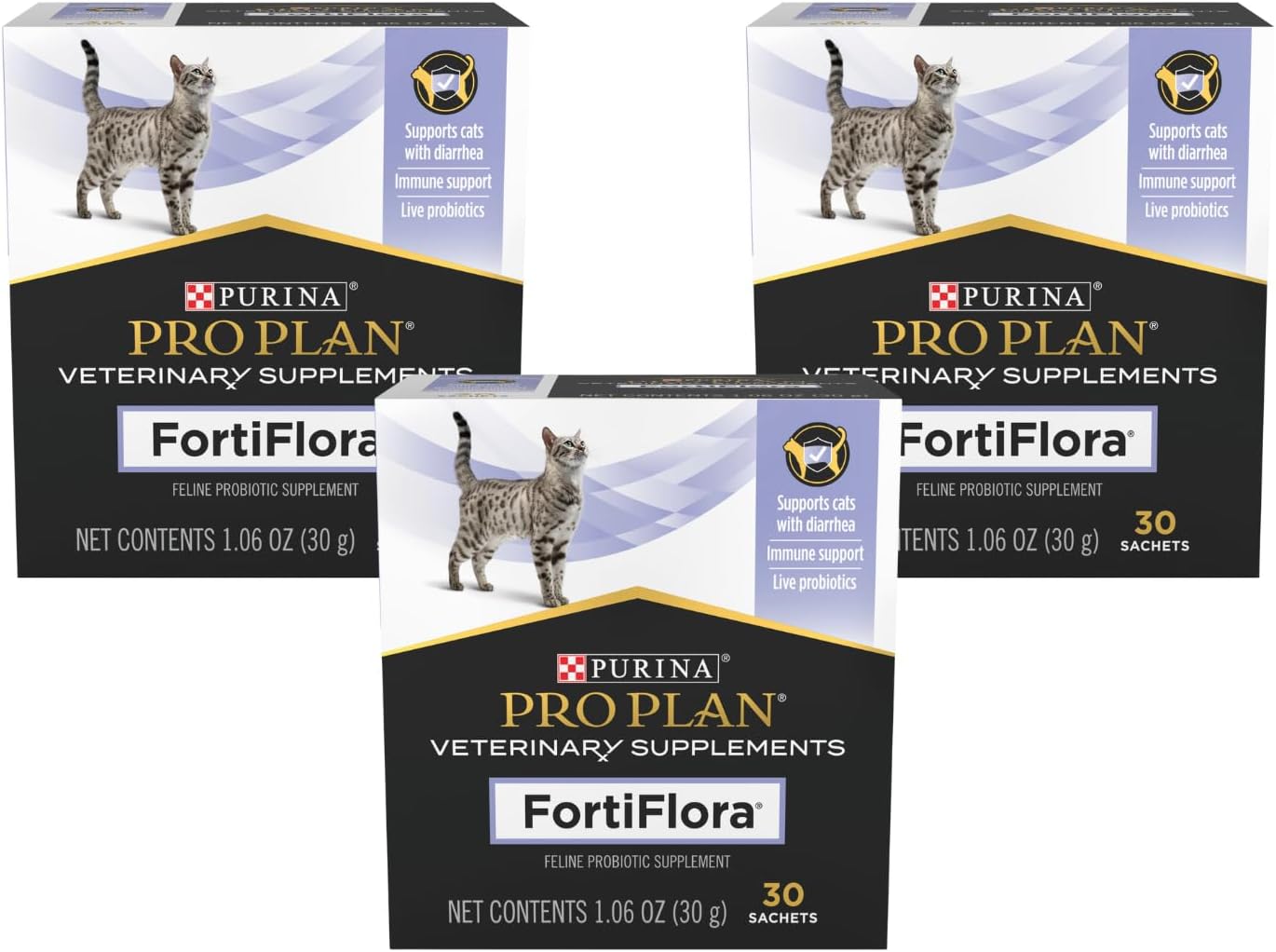
What FortiFlora gives you that natural alternatives don't
A few things matter for a pregnant dog with active GI upset:
Known, consistent dose. Each FortiFlora packet contains a specified minimum CFU (colony forming units) of E. faecium SF68. Plain yogurt might contain anywhere from a useful dose to almost none, depending on how the brand processes it, how long it's been on the shelf, and the temperature it was stored at.
Strain selected for the specific job. SF68 was selected and developed for veterinary GI use. The strains in yogurt are dairy-fermentation strains that survive the gut to varying degrees — some pass right through.
No dairy load. Pregnant dogs may already have GI sensitivity. Adding dairy on top of an upset stomach can make things worse, not better.
Documented use in dogs. FortiFlora has been used in pregnant and lactating dogs in veterinary practice without major reported issues. That's not the same as a controlled study on pregnancy outcomes (there isn't one), but it's more documentation than yogurt has in dogs.
What the natural alternatives offer
Lower cost. A tub of plain yogurt is cheaper per serving than a FortiFlora packet.
Whole-food approach. Some owners prefer giving recognizable foods over manufactured supplements during pregnancy. Reasonable preference, even if it's not strictly clinical.
Routine GI support. For ongoing mild gut support during a healthy pregnancy without acute symptoms, a daily spoon of plain yogurt or kefir is reasonable and probably harmless.
No prescription or vet involvement. Available at any grocery store.
What we don't actually know
There's no large-scale study on FortiFlora outcomes specifically in pregnant dogs. There's no large-scale study on yogurt or kefir in pregnant dogs either. What we have:
- Clinical use of FortiFlora in pregnant patients without reported harm
- Centuries of dogs eating dairy with no reported teratogenic effect
- General knowledge that E. faecium SF68 is non-pathogenic and doesn't cross the placenta
We don't have head-to-head outcome data. The choice is partly evidence-informed and partly preference-driven.
A reasonable framework
For a pregnant dog with active diarrhea or loose stool: FortiFlora is the better choice. Consistent dose, known strain, no dairy load. Talk to your vet first to confirm there's nothing pregnancy-specific that complicates the picture.
For a pregnant dog with mild GI sensitivity but no acute symptoms: Either approach is reasonable. Plain unsweetened yogurt or kefir works for many dogs. If your dog has been on yogurt before pregnancy without issues, continuing is fine.
For routine "gut support" during a healthy pregnancy with no symptoms: Neither is strictly necessary. Most pregnant dogs do fine on their regular diet without probiotic supplementation. Save the intervention for when there's something to address.
For lactation/whelping issues: FortiFlora is sometimes used in newborn puppies for fading puppy syndrome and gut colonization. That's a vet-supervised use, different from pregnancy supplementation.
What to avoid
A few things owners sometimes try that aren't great:
- Flavored or sweetened yogurt — added sugar and artificial sweeteners are a problem. Pregnant or not.
- Raw milk from unverified sources — pathogen risk (Salmonella, E. coli, Listeria) is higher during pregnancy when the immune system is modulated.
- Probiotic supplements not designed for dogs — human strain combinations may not colonize a dog gut effectively, and dosing isn't calibrated for canine weight.
- Stopping all GI support cold during pregnancy because of vague safety concerns — if your dog was on FortiFlora successfully before pregnancy for a real reason, abrupt discontinuation can backslide the gut.
Cost comparison
Roughly, for a month of use:
- FortiFlora: ~$28-31
- Plain yogurt (Greek, unsweetened, modest brand): ~$10-15 worth of yogurt provides daily portions for a month
- Plain kefir: Similar to yogurt, ~$15-20
- Raw goat milk: $20-40 depending on source
Natural alternatives are cheaper per month. Whether they're equivalent is a separate question.
Bottom line for pregnant dogs
If there's an active GI issue, FortiFlora has the dose consistency and clinical track record that matter. If your dog is healthy and you want gentle ongoing support, plain yogurt or kefir is a reasonable choice, though not strictly necessary. Either way, talk to the vet who's managing the pregnancy before making changes.
When to call your vet
- Any GI symptoms in a pregnant dog (diarrhea, vomiting, appetite changes)
- Pregnancy complications of any kind — bleeding, lethargy, fever
- Decisions about supplementation in a high-risk pregnancy
- Late-stage pregnancy with new GI symptoms (vet wants to monitor more closely)
- Lactation issues in the postpartum period
For most pregnancies, the supplementation decision is less critical than the question of whether your dog needs supplementation at all. Most don't.