What's actually happening during the bloating phase
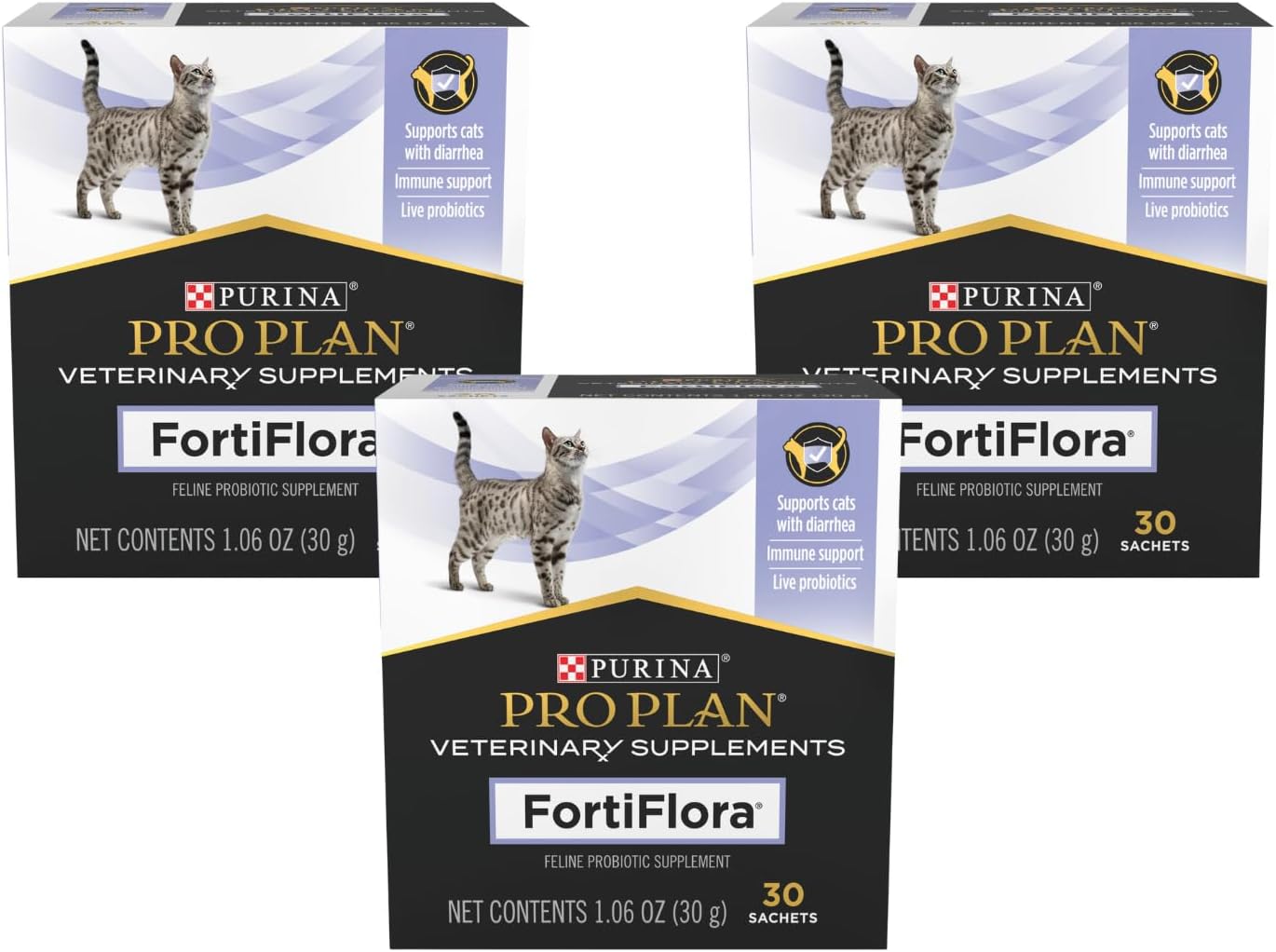
Antibiotics don't just kill the bacteria they're targeting. They also wipe out a big chunk of the normal gut flora, which is why post-antibiotic diarrhea is so common in the first place. When you start FortiFlora to recolonize, you're introducing live Enterococcus faecium SF68 into a gut that has fewer competing organisms than usual. The new bacteria establish quickly, ferment available carbs, and produce gas as a normal byproduct.
That gas has to go somewhere. Some of it diffuses through the gut wall and gets cleared by breathing. Some passes audibly. And some of it pushes the gut outward, which is the bloating your dog is showing.
For most dogs, this peaks somewhere between day 2 and day 4 of recolonization, then fades. By day 7 it's usually gone.
When mild bloating is fine
If your dog is bloated but still has all of the following, you're almost certainly in normal adjustment territory:
- Eating their regular meals, even if a little less enthusiastically
- Drinking water without prompting
- Active and responsive — not lethargic
- Stool is soft but not watery
- Belly is rounder than usual but soft to the touch
This pattern resolves on its own. You don't need to do anything except keep giving the supplement on schedule.
When bloating means something else
A few signs change the picture and need a vet call the same day:
- Hard, distended belly that feels tight rather than soft. This can indicate gas buildup that the dog can't pass, or in deep-chested breeds, the early signs of GDV (bloat-twist), which is a surgical emergency.
- Bloating with retching but nothing coming up. Unproductive vomiting plus a distended belly is the classic GDV presentation.
- Bloating that gets worse after day 5 instead of better. Adjustment effects should be on a downward curve by then.
- Refusal of water, not just food. Dogs will often skip a meal during adjustment but they still drink.
- Collapse, weakness, or pale gums. This is not a supplement problem.
If you see any of these, treat it as urgent. GDV in particular has a narrow treatment window.
Practical things you can do
A few small adjustments during the adjustment phase often help:
- Smaller, more frequent meals. Feeding twice a day with FortiFlora mixed in usually works better than one big meal during this period. Less volume in the stomach at any one time means less pressure.
- Skip table scraps and treats. New protein or fatty additions on top of recolonization can extend the bloating phase. Save them for after day 7.
- Light walks, not hard exercise. Walking helps gas move through. Running or vigorous play with a full belly increases the risk in deep-chested breeds.
- Keep water available, but not gulped. Some dogs drink a lot all at once after antibiotics. Smaller, more frequent water access is better.
How long to keep going
For straightforward post-antibiotic recovery, plan on 10-14 days of FortiFlora total — longer than the antibiotic course itself in most cases. The first 3-5 days are adjustment; days 5-10 are the productive recovery window; days 10-14 give the colony time to stabilize.
If your dog had a long antibiotic course (more than 14 days), extend FortiFlora to match — sometimes 3-4 weeks. The longer the antibiotics ran, the more disrupted the gut microbiome is, and the longer the recovery.
When to call your vet
- Bloating that gets worse past day 5
- Hard, distended belly at any point
- Unproductive retching
- Refusal to drink water
- No improvement in stool quality by day 10 of FortiFlora
- Your dog is a deep-chested breed (Great Dane, Standard Poodle, Weimaraner, German Shepherd) and shows any belly distension at all — these breeds are at higher GDV risk and bloating warrants caution
Most cases of post-antibiotic bloating settle on their own. The point of paying attention is catching the rare case where something else is happening.