What's actually happening during an IBD flare
Inflammatory bowel disease in dogs isn't a single condition — it's a category that includes lymphocytic-plasmacytic enteritis, eosinophilic enteritis, and several other inflammatory patterns. The common feature: the gut wall has chronic inflammation that flares up periodically with symptoms.
During a flare, the gut is inflamed, motility is disrupted, the microbiome is often imbalanced, and the dog feels lousy. Symptoms typically include some combination of soft stool or diarrhea, gas, decreased appetite, occasional vomiting, and visible discomfort.
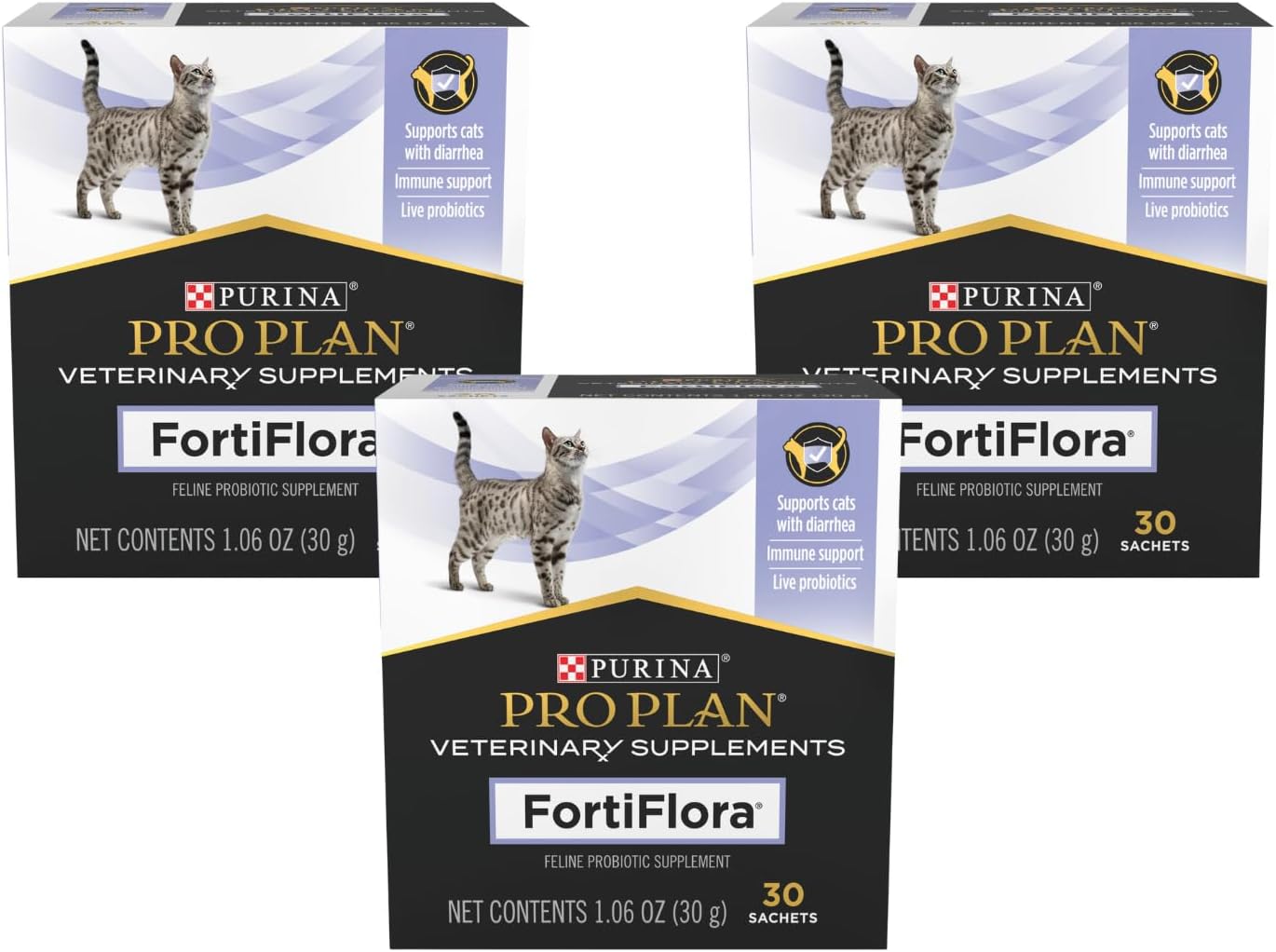
FortiFlora's role in this scenario is supportive, not curative. It helps stabilize the microbiome side of the equation. It doesn't reduce inflammation directly.
When FortiFlora helps during an IBD flare
A few scenarios where adding it makes sense:
Mild flare with mostly GI symptoms. Soft stool, some gas, mild appetite changes — but the dog is otherwise eating, drinking, and acting close to normal. FortiFlora can support recovery alongside your vet's regular flare protocol.
Flare immediately following antibiotic treatment. Many IBD dogs get antibiotics during severe flares (especially metronidazole). Post-antibiotic, FortiFlora helps rebuild the gut flora that was depleted during treatment.
Flare during a known trigger event. Stress, dietary indiscretion, seasonal patterns — if you know what's triggering this flare, FortiFlora is a reasonable add-on while you address the trigger.
Vet has previously recommended FortiFlora for your dog. If it's been part of your management plan before, continuing through flares is generally fine.
When to hold off
Some situations where you should wait or check first:
Severe flare with systemic symptoms. Vomiting, refusal to drink, lethargy, dehydration — these need vet attention first. Probiotics aren't going to address the urgent issue.
First flare you've ever seen. Don't manage a first IBD flare at home with supplements. Get a diagnosis and a treatment plan from your vet before adding probiotics.
Dog is on aggressive immunosuppressants. High-dose prednisone, cyclosporine, or other strong immunosuppressants change the calculation slightly. The strain in FortiFlora is very safe, but check with your vet first.
History of probiotic reactions. If your dog has reacted to probiotics before, don't introduce one during an active flare. Wait until you're past the acute phase.
Bloody diarrhea. This is a vet visit. Don't try to manage at home.
How to add FortiFlora to a flare protocol
If your vet hasn't said otherwise, a reasonable approach:
- Start at the first sign of flare. Earlier is better than later.
- Continue through the flare and 7-10 days after symptoms resolve. Don't stop the moment things improve.
- Don't change other medications. Add FortiFlora to whatever protocol your vet has you on, but don't adjust the rest yourself.
- Communicate with your vet. Mention you're adding it. Most vets are fine with it; some have specific reasons to prefer a different probiotic.
What about during steroid courses
IBD dogs on prednisone or similar steroids often have:
- Increased thirst and urination
- Increased appetite
- Some gut sensitivity
- Modest immune suppression
FortiFlora is generally compatible with steroid treatment. The bacteria don't interfere with steroid action. Steroid-related gut effects can be reduced somewhat by daily probiotic support during the course.
For long-term low-dose steroid therapy (a common IBD management approach), continuing daily FortiFlora is reasonable.
Combination with prescription diets
Many IBD dogs are on prescription GI-friendly diets — Hill's i/d, Royal Canin Gastrointestinal, Purina HA, or hydrolyzed protein formulas. FortiFlora is compatible with all of these.
Mix the packet into the prescription food the same way you would regular food. The supplement doesn't interfere with the diet's intended GI-friendly properties.
When the flare isn't responding
Some flares don't respond to standard protocol plus FortiFlora. If after 5-7 days of treatment you're not seeing improvement:
- Re-check the diagnosis (sometimes other GI conditions get labeled IBD initially)
- Consider whether the trigger is still present
- Talk to your vet about escalating treatment
- Don't keep adding more supplements hoping something works
Probiotic alone isn't enough for moderate-to-severe flares.
Long-term maintenance vs flare management
Some IBD dogs do well on daily FortiFlora long-term as part of maintenance. Others use it only during flares. Both approaches are reasonable.
Daily long-term:
- Better for dogs with frequent mild flares
- Some evidence for slightly fewer flare episodes
- Higher monthly cost
- Simpler management — no decision required
Flare-only:
- Better for dogs with rare flares
- Lower cost
- Requires recognizing flares early to start in time
- Adds variable to management
Your vet can help you decide which fits your dog's pattern.
What about combining with other probiotics
Some IBD dogs are on Visbiome Vet, Proviable, or similar multi-strain products as part of long-term management. Should you add FortiFlora during a flare?
Usually not necessary. The existing probiotic is doing its job. Adding FortiFlora during a flare on top of an existing probiotic doesn't typically improve outcomes — you're paying twice for overlapping benefit.
Exception: if your existing probiotic was started in the last two weeks and hasn't fully established yet, briefly adding FortiFlora for fast colonization during a flare can help.
Bottom line
For mild IBD flares with mostly GI symptoms, FortiFlora is generally safe and often helpful alongside your vet's standard protocol. For severe flares with systemic signs, focus on the urgent treatment first; probiotics later. Talk to your vet, especially if it's been a while since you reviewed your dog's flare management plan.
When to call your vet
- First flare you've seen in your dog — get diagnosis confirmed
- Severe flare with vomiting, refusal to drink, or lethargy
- Bloody stool at any point
- Flare lasting more than 5-7 days despite treatment
- Flares getting more frequent or more severe over time
- Your dog is on multiple medications and you're unsure about supplement compatibility
- Any new symptoms during a flare that aren't typical for your dog's pattern