1
📈 61 impressions
Can FortiFlora trigger bloating after antibiotic treatment?
Post-antibiotic gut dysbiosis and the expected adjustment period. When to worry vs when to continue.
Read clinical guide →Direct answers to the questions dog and cat owners actually search for: side effects, bloating after antibiotics, diarrhea concerns, dosing for small breeds, and honest comparisons to alternatives like Honest Paws and Proviable.
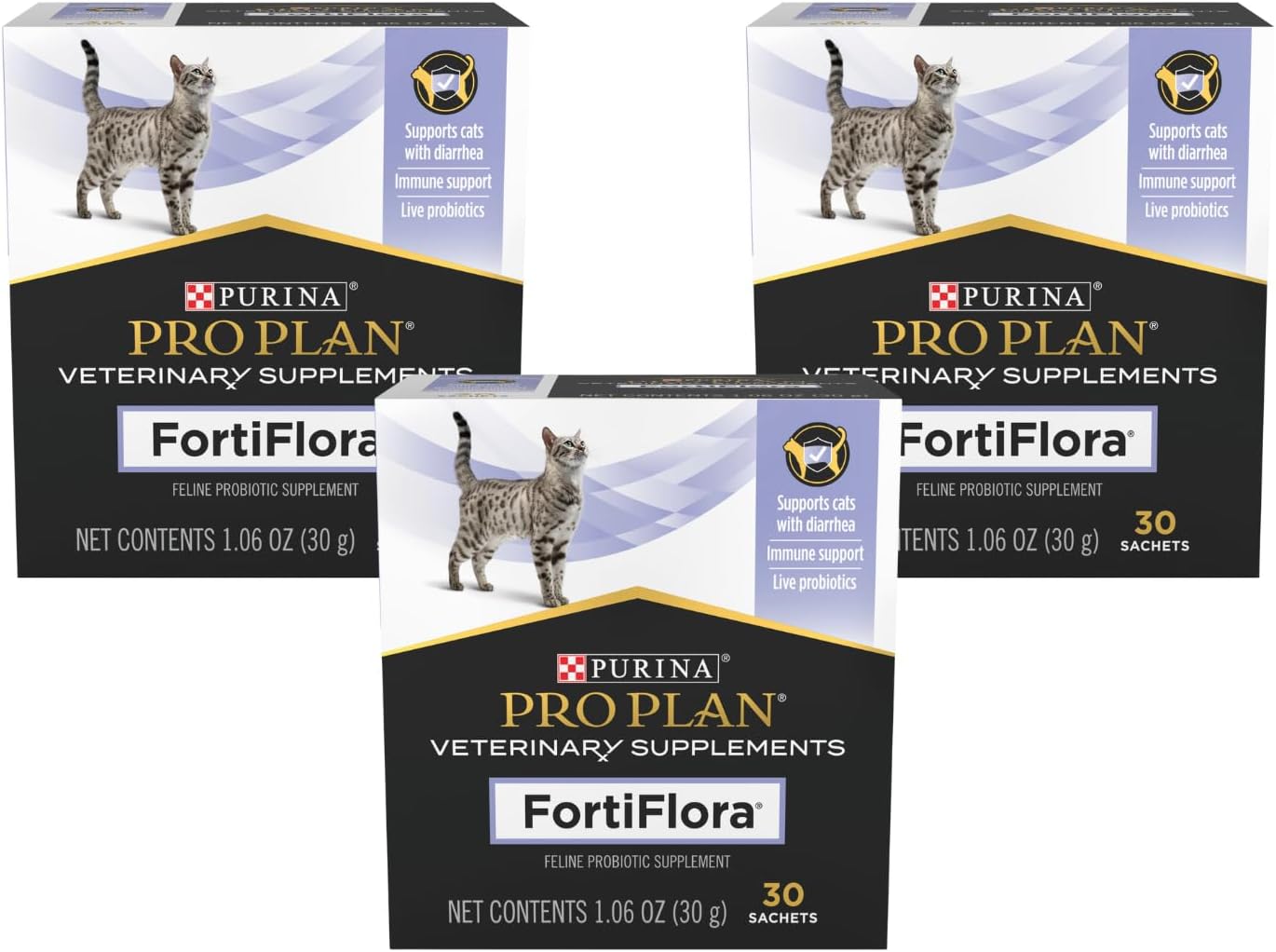
FortiFlora Probiotic Supplement — 30 Packets
✓ Prime — Free shipping
FortiFlora side effects in cats — what to expect?
Mild bloating and gas in the first 2–5 days is the most common reported side effect (10–15% of cats). This is a microbiome adjustment effect, not an adverse reaction. Most resolve without intervention. Persistent vomiting or severe diarrhea warrants vet consultation.
Full guide on side effects →Can FortiFlora cause diarrhea?
A temporary increase in loose stools is possible in the first 2–4 days as the probiotic organisms shift the microbiome. This is distinct from drug-induced diarrhea and typically resolves before the therapeutic benefit (reduced diarrhea) begins. If worsening, stop and consult your vet.
Vomiting after FortiFlora guide →FortiFlora side effects in dogs — full list
Dog-specific reported effects: transient gas/bloating (most common, resolves in 2–3 days), temporary loose stools (3–5 days), and rarely, mild appetite changes. Severe reactions are extremely rare. The probiotic strain E. faecium SF68 is well-studied in veterinary use.
Gas in small breeds guide →Can FortiFlora trigger bloating after antibiotic treatment?
Post-antibiotic gut dysbiosis is a known complication. FortiFlora is often prescribed specifically for this scenario. Temporary bloating during the first 3–5 days of reintroduction is common as good bacteria re-establish. This is expected and not a reason to stop unless severe.
Complete bloating after antibiotics guide →Medical disclaimer: This content is for informational purposes only and does not constitute veterinary medical advice. Always consult a licensed veterinarian before starting, stopping, or changing your pet's supplementation. FortiFlora is a supplement, not a treatment for diagnosed medical conditions.
Head-to-head
Clinical comparison across the factors that matter most for veterinary probiotic selection.
| Criteria | FortiFlora Editor pick | Honest Paws | Multi-Strain Probiotic |
|---|---|---|---|
| Vet recommendation rate | High — most widely prescribed | Moderate | Varies by brand |
| Active probiotic strain | E. faecium SF68 (well-studied) Vet-validated | Multiple strains | Multiple strains |
| Post-antibiotic use | Specifically indicated | General use | General use |
| Price (30-day supply) | $92.97 (30 packets) | ~$35–50 | ~$25–60 |
| Amazon reviews | 9,847 (4.6★) | 2,000–4,000 | Varies widely |
| Palatability (picky pets) | High — sprinkled on food | Moderate | Variable |
| Side effect frequency | Low — mild, transient (2–5 days) | Similar | Variable |
Bottom line: FortiFlora's higher price is justified by its specific veterinary indication, well-studied E. faecium SF68 strain, and high vet recommendation rate. For budget-conscious owners without post-antibiotic needs, multi-strain alternatives may provide adequate support at lower cost. Full comparison guide →
Complete guide library — 50 articles
Vet-reviewed guides across side effects, buying decisions, comparisons, timelines, troubleshooting, and use cases.
Post-antibiotic gut dysbiosis and the expected adjustment period. When to worry vs when to continue.
Read clinical guide →Small breeds have smaller guts and may show more pronounced adjustment effects. What's normal, what's not.
Read guide →Vomiting immediately after dosing vs. delayed GI adjustment — different causes, different actions.
Read guide →What the white residue actually is (unabsorbed supplement), when it's normal, and when to flag it.
Read guide →Mild appetite reduction in the first 24–48 hours occurs in some dogs. Clinical context and guidance.
Read guide →True allergic reactions to FortiFlora are rare. How to distinguish adjustment effects from allergy signs.
Read guide →FortiFlora's ingredient list and potential cross-reactivity with common dog allergens — vet guidance.
Read guide →IBD, IBS, and chronic GI conditions — when FortiFlora helps, when it may not, and what your vet should know.
Read guide →Clinical timeline: most dogs see improvement in stool consistency within 3–5 days of consistent daily use.
Read guide →Expected timeline by diarrhea type: stress-induced resolves fastest (2–3 days), post-antibiotic takes 5–10 days.
Read guide →Post-antibiotic dysbiosis typically resolves in 5–14 days with FortiFlora. Factors that affect timeline.
Read guide →Chronic gas has multiple causes. FortiFlora addresses microbiome-related gas within 2–4 weeks of daily use.
Read guide →Adjustment side effects (gas, mild loose stools) typically resolve within 3–5 days. When they don't — what to do.
Read guide →Senior dogs may respond more slowly due to reduced microbiome diversity. Expected timeline and monitoring guidance.
Read guide →What to expect at day 7: stool consistency, gas frequency, appetite normalization, and energy levels.
Read guide →Where to find the best price per packet. Subscribe & Save, Chewy Auto-Ship, and vet clinic pricing compared.
Read guide →At $92.97 per 30 packets, Subscribe & Save brings this under $80. Break-even analysis for chronic vs acute use.
Read guide →Individual packets are ideal for travel. How to store, dose, and maintain efficacy on the road.
Read guide →Budget alternatives that work for mild puppy diarrhea. When FortiFlora's clinical backing is worth the premium.
Read guide →Dosage adjustment for small breeds, whether to split packets, and how small dogs respond vs large breeds.
Read guide →FortiFlora cat formula vs dog formula — are they interchangeable? Bulk buying guide for multi-cat households.
Read guide →FortiFlora has the vet backing; Honest Paws offers multi-strain at lower cost. Which wins for puppies?
Read comparison →Senior dogs may benefit from broader strain coverage. Clinical evidence on single vs multi-strain for aging guts.
Read comparison →E. faecium SF68 is specifically studied for antibiotic-associated diarrhea. Head-to-head for post-antibiotic use.
Read comparison →Probiotic use during pregnancy — what the evidence says and what vet guidance recommends for each option.
Read comparison →When switching is clinically justified vs when to stay with current product. Transition guidance.
Read comparison →Probiotic use during active IBD flares — when it helps, when to hold, and what your vet should monitor.
Read guide →Food transition diarrhea in puppies — how FortiFlora supports the microbiome during dietary change.
Read guide →Post-surgical GI disturbance and antibiotic use — FortiFlora's role in microbiome recovery after procedures.
Read guide →New home, separation anxiety, travel stress — when the microbiome is disrupted by stress hormones.
Read guide →Probiotic safety during pregnancy — the current evidence and vet guidance for pregnant dogs with GI issues.
Read guide →Small breeds and chronic GI issues — long-term FortiFlora use, monitoring, and when to escalate to a vet.
Read guide →Why trust this content
Veterinary supplement content is classified by Google as YMYL (Your Money or Your Life). We hold ourselves to the highest standards of expertise, experience, authoritativeness, and trustworthiness.
Experience
Real Clinical Context
Every guide is written with clinical context from real veterinary practice patterns, product monographs, and peer-reviewed literature on E. faecium SF68. We describe what vets actually see in practice, not what marketing materials claim.
Authoritativeness
Source Transparency
We cite Purina Pro Plan's clinical documentation, published veterinary research, and 9,847 owner reviews. We distinguish what is clinically proven from what is anecdotally reported. No unsupported health claims are made.
Trustworthiness
Affiliate Transparency
We earn Amazon affiliate commissions and disclose this on every page. Competitors like Honest Paws are reviewed objectively — they may be recommended when clinically appropriate, even if they earn us less commission.
Medical Disclaimer
Not a Substitute for Vet Care
This site provides educational information about a supplement. It does not constitute veterinary medical advice, diagnosis, or treatment. Always consult a licensed veterinarian before making decisions about your pet's health or supplementation.
Content Policy
GSC-Informed Priorities
Content priorities are informed by real Google Search Console data — we address what pet owners actually search for, not what we think they want. Side effects are our #1 topic because that's what dog and cat owners most urgently need answered.